


Filters
Close

簡單自我檢查-坐骨神經痛

坐骨神經痛的簡單自我檢查

坐骨神經痛的簡單自我檢查


以下內容經 鄭岳醫生 審校 4月10日 2026

JointCare JointCare

如何在家簡單進行坐骨神經痛自我檢查?

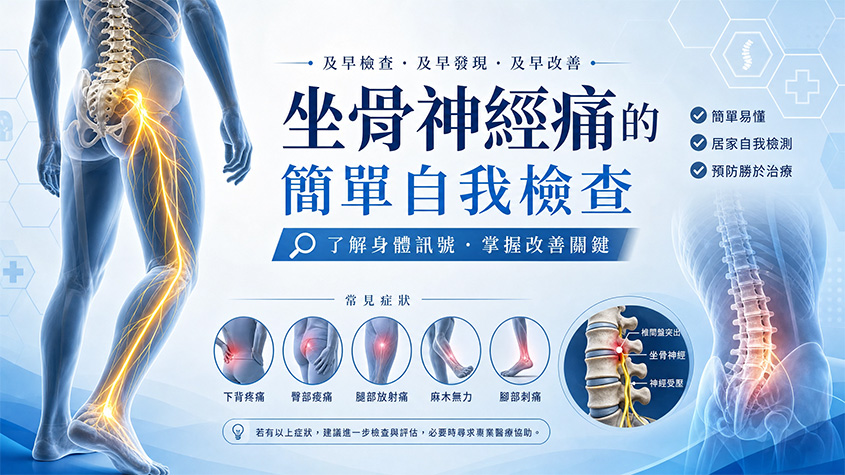
以下文章將會教你如何在家簡單進行坐骨神經痛的簡單自我檢查(臨床測試),比你想像還要簡單。坐骨神經痛主要因為腰椎病變壓迫到坐骨神經,引發從屁股至大腿、膝蓋、腳後跟、甚至腳趾疼痛,所以我們只需要重現一些容易導致神經受壓的肢體動作,再觀察結果便能自我檢查,也是平常醫生嘴邊的臨床測試。


坐骨神經痛的自我檢查測試方法:

(1) 單腳跟站立測試

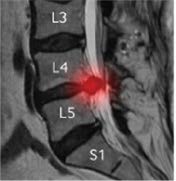
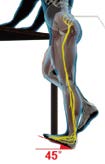
雙手扶持著安全的地方,首先患側腿站在地上,提起另一邊腿,再讓支撐腳的腳尖慢慢提起。若患側腿無力提起腳尖(腳掌)至45度或提起後出現麻痛(放射性疼痛:大腿至小腿扯痛),便能確診是L4~L5出現神經根受壓。

L4-L5神經根受壓 單腳跟站立測試

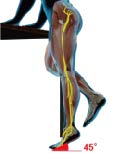
(2) 單腳尖站立測試

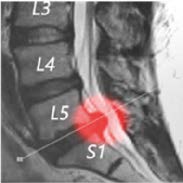
雙手扶持著安全的地方,首先患側腿站在地上,提起另一邊腿,再讓支撐腳的後跟慢慢提起。若患側腿無力提起後跟(腳踝)至45度或提起後出現麻痛(放射性疼痛:大腿至小腿扯痛),便能確診是L5~S1出現神經根受壓。

L5-S1神經根受壓 單腳尖站立測試

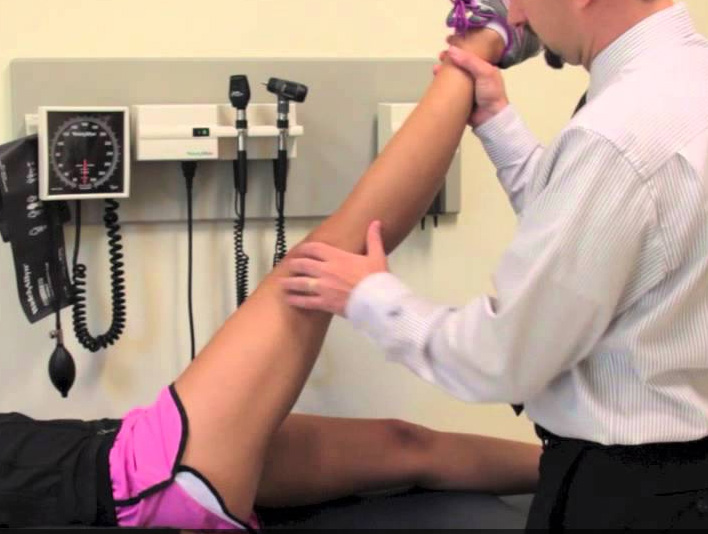
(3) 直膝抬腿測試 (SLR test)

這動作可請家人協助,首先患者躺在床上,另一人將患者的患腿慢慢提高,記得腿部伸直,若抬高腳後有(放射性疼痛:大腿至小腿扯痛)增加,代表神經根有壓迫。

直膝抬腿測試

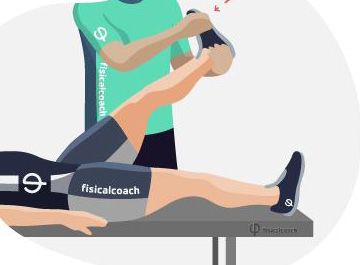
(4) 抬腿加強測試 (Bragard's test)

這動作可請家人協助,首先患者躺在床上,另一人將患者的患腿慢慢提高,記得腿部伸直,同時把腳掌向內屈,若抬高腳後有(放射性疼痛:大腿至小腿扯痛)增加,代表神經根有壓迫。

抬腿加強測試


如何測試神經根受壓的位置:

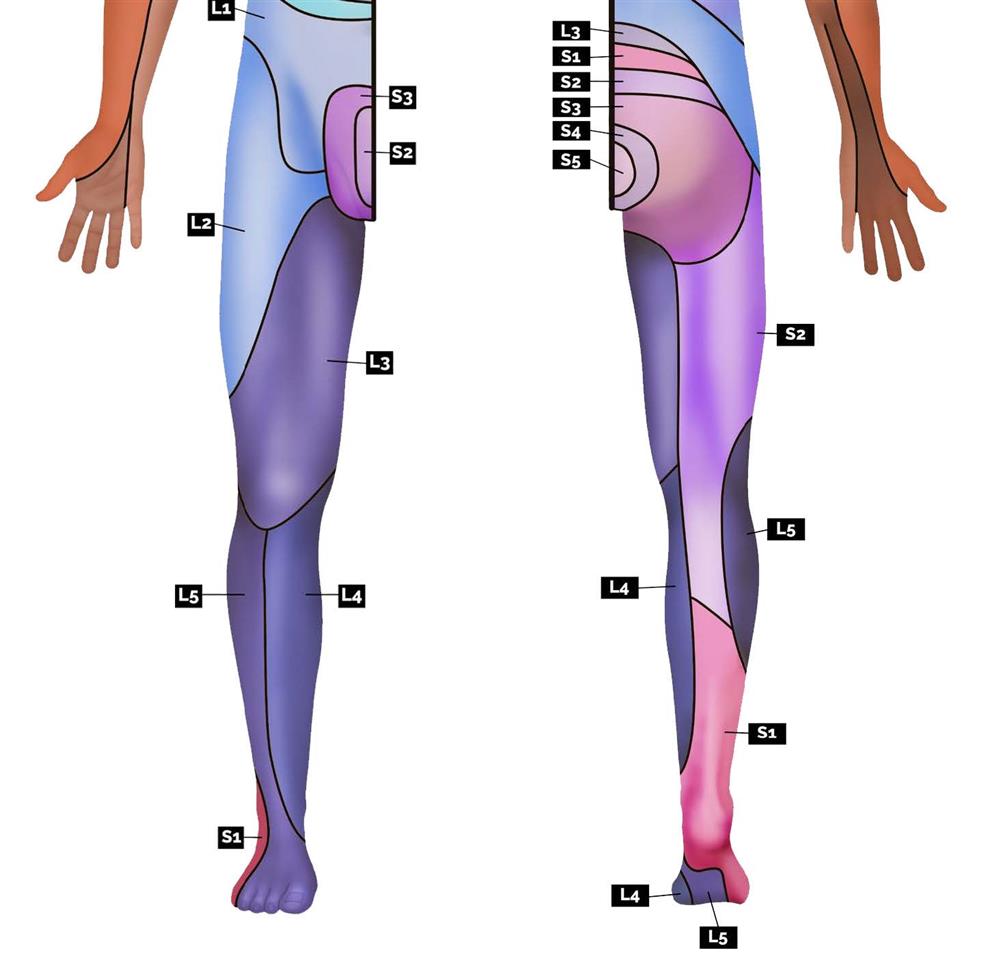
腰椎神經受壓之下肢肌節檢查 (Myotome)

根據神經受壓之肌節圖 (Myotome) 可以區分下肢不同區域受到不同腰椎位置的神經根受到壓迫的影響:

(1) 高位腰椎 (L2~L3 / L3~L4) 神經受壓:大腿或膝蓋麻痛(扯痛)無力。

(2) 中位腰椎 (L4~L5) 神經受壓:小腿麻痛(扯痛)無力。

(3) 低位腰椎 (S1~S2) 神經受壓:腳掌麻痛(扯痛)無力。

下肢肌節檢查圖
 

文章參考:

Willhuber, G. O. C., & Piuzzi, N. S. (2023). Straight Leg Raise Test. StatPearls [Internet]. Treasure Island (FL): StatPearls Publishing.

https://www.ncbi.nlm.nih.gov/books/NBK539717/

Homayouni, K., Jafari, S. H., & Gladman, D. D. (2018). Sensitivity and Specificity of Modified Bragard Test in Patients With Lumbosacral Radiculopathy Using Electrodiagnosis as a Reference Standard. Journal of Chiropractic Medicine, 17(1), 36–41.

https://www.ncbi.nlm.nih.gov/pmc/articles/PMC5883635/

Tawa, N., Rhoda, A., & Diener, I. (2017). Accuracy of clinical neurological examination in diagnosing lumbo-sacral radiculopathy: a systematic literature review. BMC Musculoskeletal Disorders, 18(1), 93.

https://bmcmusculoskeletdisord.biomedcentral.com/articles/10.1186/s12891-017-1452-y

Nee, R. J., Jull, G. A., Vicenzino, B., & Coppieters, M. W. (2022). Reliability of the straight leg raise test for suspected lumbar radicular pain. Musculoskeletal Science and Practice, 59, 102534.

https://www.sciencedirect.com/science/article/pii/S246878122200021X

Stochkendahl, M. J., et al. (2018). National Clinical Guidelines for non-surgical treatment of patients with recent onset low back pain or lumbar radiculopathy. European Spine Journal, 27(1), 60-75.

https://link.springer.com/article/10.1007/s00586-017-5099-2


  medexbracehk 萬得醫療  

medexbracehk 萬得醫療用品有限公司

1999年在香港成立,一直致力為香港及世界各地提供專業的醫療護具給予病人有效、無風險的護具治療選項。 本公司的產品包括矯形器、固定器和牽引器,是香港政府醫院及屈臣氏、迪卡儂、康爾等健康店的供應商。同時也致力為大眾提供骨科知識,讓大眾更了解自己的病理,選擇合適自己的治療方法。

Acknowledgement : In collaboration with Dr. N.Cheng, M.D.,Ph.D., Orthopaedic Surgeon Copyright©2026 All rights reserved


鄭岳 醫生 是一位資深骨科醫生,曾任職於兩所大學教學醫院骨科部門並服務於比利時、英國及香港公營和私營醫院骨科部,累積50年臨床骨科經驗,他擁有以下榮譽學位:
國立台灣大學醫事技術理學士
BSc. of Medical Technology, National Taiwan University

比利時魯汶大學內外全科醫學博士
Doctor of Medicine (M.D.), Catholic University of Leuven
Doctor in de Genees., Heel. en Verloskunde,
Katholieke Universiteit Leuven

比利時魯汶大學醫理學博士
Doctor of Medical Science(Ph.D.), Catholic University of Leuven
Doctor in de Medische Wetenschappen,
Katholieke Universiteit Leuven

比利時魯汶大學骨科文憑
Certificate of Orthopaedic Surgery, Catholic University of Leuven
Certificaat van Geneesheer-Specialist in de Orthopedic,
Katholieke Universiteit Leuven


新界
 
大埔區
萬得醫療用品有限公司
新界大埔汀角路55號太平工業中心二座13樓D室
(+852) 2656 8211
 

免責聲明

我們所提供的醫療信息並不代表閣下主診醫生之醫療建議,關於錯誤使用此產品而造成的傷害或併發症,本製造商概不負責,若有需要在使用前請咨詢你的主診醫生。 產品佩戴時需要恰當的鬆緊度,不能過緊引發疼痛及影響血液循環。如有皮膚過敏,請停止使用。

Disclaimer

We do not provide any kind of medical advice in the information provided. Consult your doctor for the use of this product. The manufacturer will not be liable for injuries, damage, or complications resulting from the misuse or misapplication of our product. This support should be snug but not impair circulation. If rash developed, discontinue to use and seek medical advice.